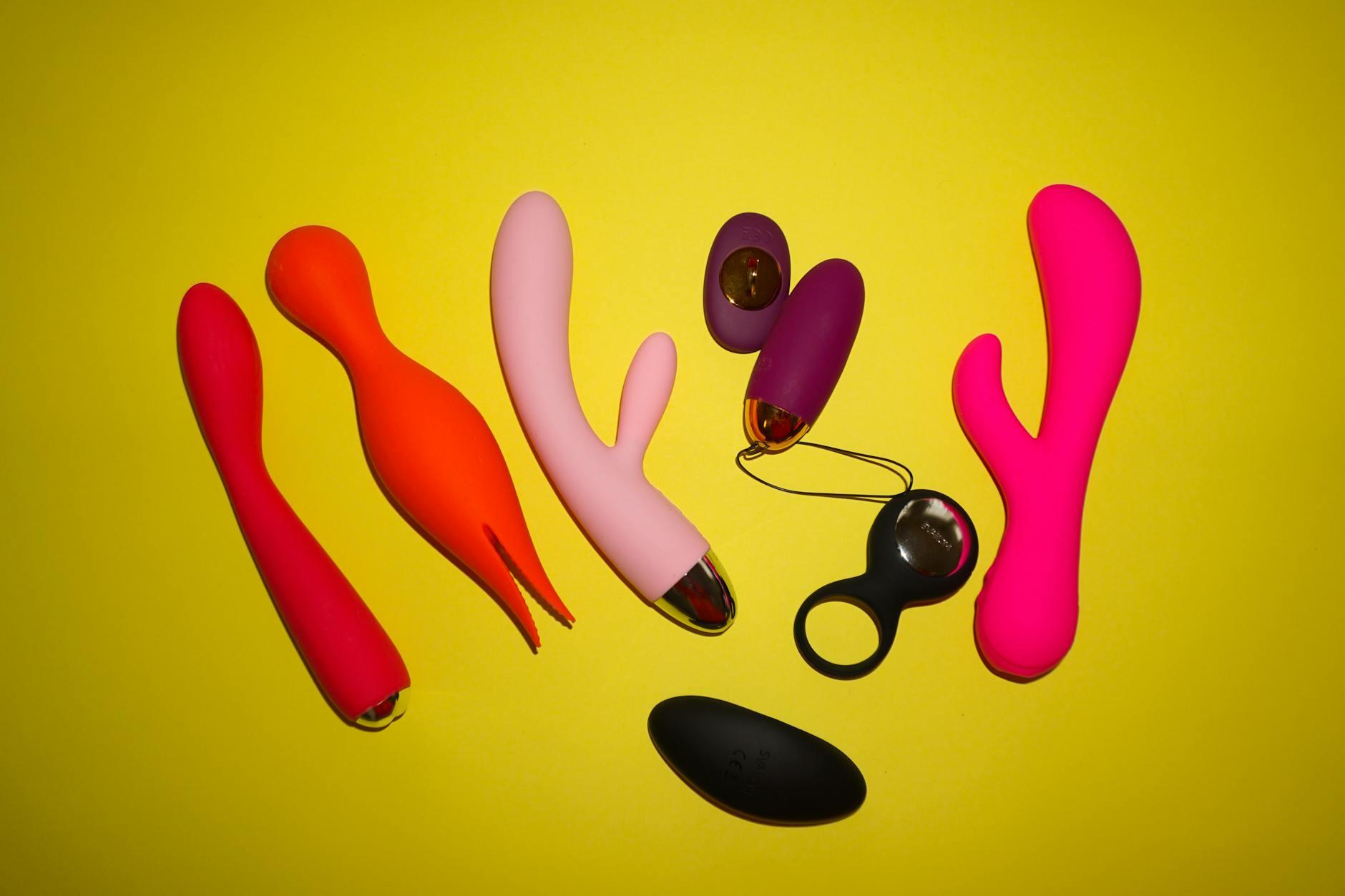
Let's be real about sensitivity
Your clitoris has eight thousand nerve endings concentrated in a space smaller than a pea. That's not a design flaw. That's the point. But it also means that not every vibrator, intensity level, or technique works for every body. Some people find standard vibrations overwhelming. Others need that intensity to reach orgasm. Both are completely normal.
The good news: lemon vibrators, especially air-suction designs, are often gentler on sensitive tissue than traditional vibrators because they stimulate without relying on direct, repetitive contact.
Why sensitivity happens (and why it matters)
Clitoral sensitivity can stem from several things. Sometimes it's physiological. Your nerve density varies naturally from person to person. Sometimes it's hormonal, especially around your cycle or during hormonal transitions. Sometimes it's psychological, tied to anxiety or past experiences. Sometimes it's a combination, and that's actually the most common scenario.
The texture of your clitoris changes throughout your cycle. During ovulation, tissue tends to be more sensitive. During menstruation, some people experience a dull soreness. After menopause, the clitoral hood thins slightly, making direct contact feel more intense.
None of this means you should avoid pleasure. It means you need tools and patterns that match your body right now, not someone else's body or what worked for you five years ago.
How lemon vibrators differ from other designs
Most traditional vibrators use oscillation, meaning they move side to side at varying speeds. That's effective for many people. But oscillation creates sustained friction, which can feel overwhelming if your clitoris is sensitive.
Lemon clitoral vibrators like the Lem work through air-pulse technology, sometimes called suction. Instead of friction, they use rhythmic bursts of air and pressure against the clitoral head. This creates stimulation that feels more diffuse, less pinpointed. It's often described as less intense but somehow more satisfying.
For sensitive clitorises, this makes a real difference. You're not fighting sensation. You're building it gradually.
What to look for when choosing a lemon vibrator
Three specifications matter most for sensitivity.
Intensity range. The best lemon vibrator for sensitive tissue has at least four or five intensity levels, with a genuinely gentle starting point. Skip devices that only offer three settings or jump dramatically between low and medium. You want a slow ramp, not a cliff.
Pattern variety. Steady pulses feel different from rolling patterns, which feel different from waves. If you find certain patterns overwhelming, you want options to explore. Different patterns can unlock different sensations. Some sensitive people find that a rolling pattern feels better than a steady pulse at the same intensity.
Material and finish. Medical-grade silicone is non-porous and won't trap bacteria. It's also slightly softer to the touch than plastic. If your clitoris is sensitive, the texture of the toy itself matters. Matte finishes tend to feel slightly less intense than glossy ones.
Starting with a lemon vibrator if you're sensitive
Three things I recommend to every client exploring a new device.
Start with the lowest intensity setting and spend time there. Not two minutes. Ten or fifteen. Let your body wake up to the sensation. Sensitivity often diminishes as arousal builds, but you have to give arousal time to build. Most people give up after two minutes because "nothing is happening," when what's really happening is they haven't given their nervous system a chance to adjust.
Use plenty of lubrication. Water-based lube reduces friction and lets the suction sensation feel smoother. It sounds counterintuitive, but lubrication often makes sensitive clitorises feel less overwhelmed, not more.
Experiment outside the bedroom first. Sensitivity is partly physiological and partly contextual. Trying a new device for the first time when you're already aroused with a partner present is adding layers of pressure. Solo exploration is lower stakes. You get to learn what actually feels good without performing.
The lemon clitoral vibrator advantage for sensitive bodies
One reason I often recommend lemon vibrators to clients with sensitivity is the sensation profile. Because suction-based stimulation spreads sensation across the clitoral area rather than concentrating it at one point, it tends to feel less jarring. It builds more gradually.
The Lem, for instance, uses a two-stage air-pulse system that mimics a specific pattern shown in research to feel natural for bodies with clitorises. It's not designed to feel different from other clitoral vibrators. It's designed to feel the way many people's bodies actually respond.
That said, air-pulse technology is not automatically better than oscillation if you have sensitivity. Some sensitive people prefer the gentle hum of a small oscillating device. What matters is that you're not forcing yourself to use something that feels wrong.
When to adjust your expectations
If you've been told your whole life that good sex means specific sensations, you might spend a year fighting your own body's signals. Here's what I tell clients: orgasm is not the metric. Pleasure is.
Some sensitive clitorises climax easily with the right approach. Others take longer, and that's not a problem if the sensation feels good in the meantime. Some people find that they enjoy sensation without reaching orgasm, and that's valid too.
The goal is not to "overcome" sensitivity. It's to stop treating it as an obstacle and start treating it as information about how your body actually works. Once you accept that, everything changes.
Pairing your lemon vibrator with breathing and positioning
This might sound woo, but it's not. Your nervous system responds to breath. If you're tense while using a lemon vibrator, you're fighting the sensation. If you're breathing slowly and evenly, your muscles relax and sensation deepens.
Positioning also matters. Some people find that lying on their back feels too exposed and intense. Side-lying or on your front can feel less overwhelming because there's more pressure on the clitoral area, dispersing sensation. Experiment.
Angle changes everything too. Coming at your clitoris from a slightly different angle, or adjusting where the stimulation lands, can shift the sensation from overwhelming to exactly right.
FAQs about lemon vibrators and sensitive clitorises
Can I use a lemon vibrator if my clitoris is too sensitive to touch?
Yes, often more easily than with other vibrators. Because air-pulse technology doesn't rely on direct, sustained contact, it can feel less overwhelming. But start on the lowest setting and give your body time to acclimate. If it still feels too intense, you might need a lower-power device like the Berri, which offers gentler oscillation.
Does sensitivity go away the longer you use a vibrator?
Partially. Your nervous system does acclimate to sensation over time, which is called habituation. But pushing through overwhelming sensation won't speed that up. Patience actually works better. Use a device at an intensity that feels good, not at the threshold of what you can tolerate.
Should I use numbing cream before using a lemon vibrator?
No. Numbing cream defeats the purpose. You want sensation. You just want it calibrated to your actual sensitivity. If you need numbness, that's a signal that the device or intensity is wrong, not that your body is wrong.
Why does my sensitive clitoris respond better to some patterns than others?
Your nervous system has preferences, just like your taste buds do. Different patterns activate different nerve clusters. Steady pulses feel different from rolling or wave patterns. If one pattern overwhelms you, try another. This is why pattern variety matters in a lemon vibrator or any device.
Can hormonal birth control affect clitoral sensitivity?
Yes. Hormonal contraceptives can increase or decrease sensitivity for some people. It's not permanent, but it's worth tracking. If your sensitivity shifts when you start or stop hormonal birth control, that's information.
Is clitoral sensitivity related to vulvodynia or other conditions?
Some sensitivity is normal variation. But if you experience pain, burning, or rawness that doesn't improve with gentler approaches, talk to a gynecologist. Conditions like vulvodynia or contact dermatitis need medical attention, not a different vibrator.
The real point
Sensitivity is not a barrier to pleasure. It's a starting point. Once you stop fighting your body's signals and start honoring them, once you choose a lemon vibrator designed for gradual sensation and give yourself permission to use it slowly, something shifts. Pleasure stops feeling like something you have to earn and starts feeling like something you're allowed to have.
If you're still exploring, the Complete Guide to Lemon Vibrators walks through other design options and how they compare. And if you want to talk through what might work best for your body specifically, reach out to our team. We're here to help.