Let's start here
Reclaiming pleasure after sexual trauma is not about erasing what happened. It's about reclaiming your right to say yes on your own terms. Many survivors feel like their body has been hijacked. A lemon vibrator, used intentionally, can help you remember that your body still belongs to you.
I've worked with trauma survivors for over twenty years. The ones who rebuild pleasure most successfully don't rush. They don't use toys because they think they should. They use them because they've decided they want to, and they move slowly enough to notice what feels true.
Why a lemon vibrator can work differently for trauma recovery
Unlike penetrative sex or manually triggered touch, a lemon sexual toy like the Lem gives you several things trauma survivors often need: distance, control, and a predictable sensation that doesn't surprise your nervous system.
The suction stimulation of a clitoral vibrator feels qualitatively different from direct friction. It's gentler, more diffuse, and it engages the body without the intensity that sometimes triggers freeze or dissociation in survivors. Many people describe it as holding a conversation with their pleasure rather than being ambushed by it.
That matters. A lot.
Before you use any toy: create your safety container
I don't recommend touching a toy, lemon vibrator or otherwise, until you've built a real sense of safety in your body. This isn't optional and it's not therapy-speak. It's neuroscience.
Three things to establish first:
1. Physical space control. You choose where you are, how long you stay, and you can lock the door or close it. You get to decide if someone else is home, awake, or in earshot. This is about your nervous system knowing you have exit routes and privacy. No exceptions.
2. Time control. Start with a hard stop time. "I'm going to spend 10 minutes exploring" is infinitely safer than open-ended. Your brain knows there's an ending. Set a timer if it helps. Many trauma survivors find that permission to stop at any point is more important than permission to continue.
3. Grounding anchors. Before you touch yourself or a toy, identify three things you can touch that feel safe. A blanket, ice water, the floor. If your nervous system spikes, you have something else to orient to besides the toy or your genitals.

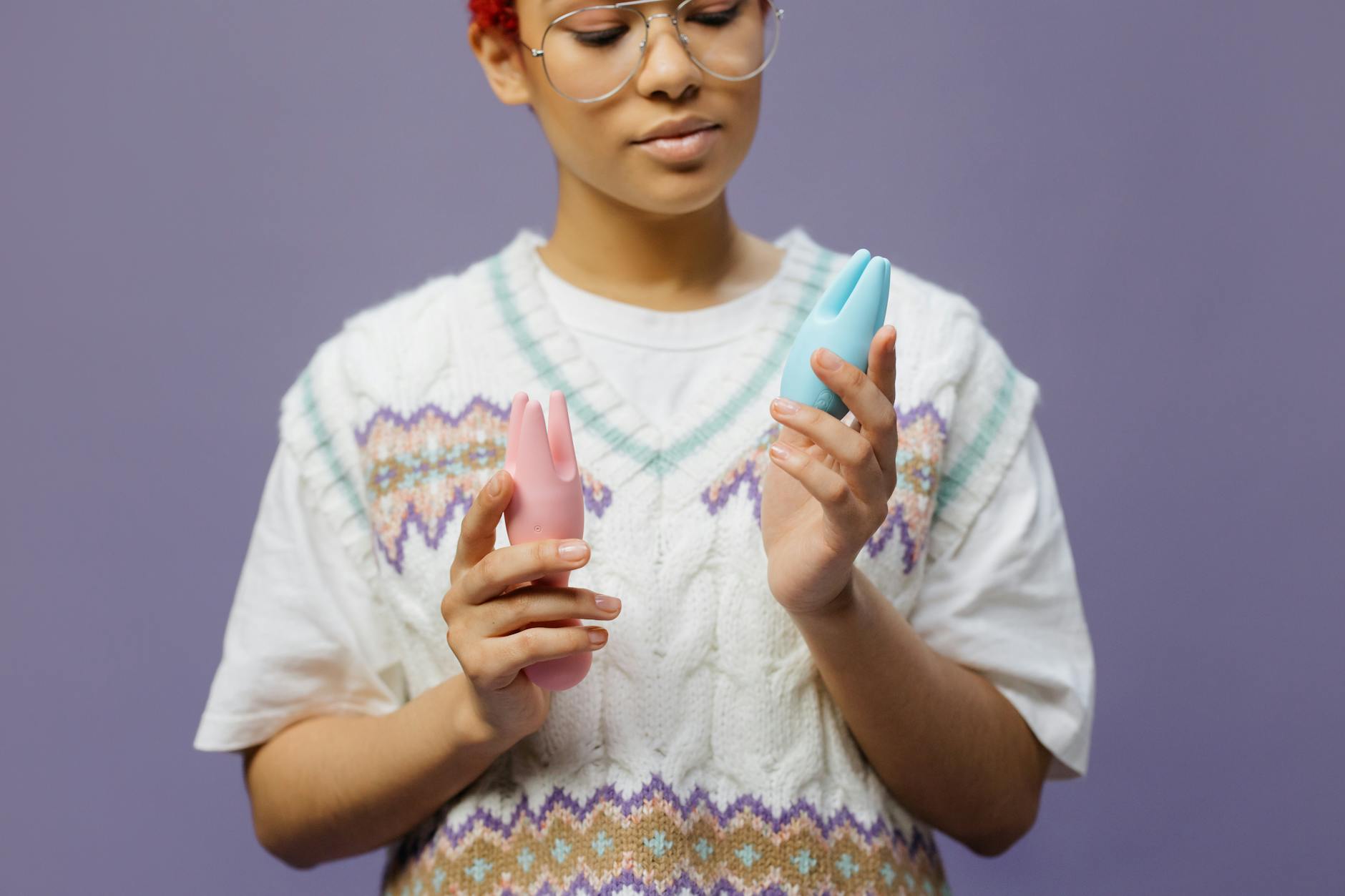
Photo by Madison Inouye on Pexels
Starting: the first time with intentionality
Honestly, the first few times you use a lemon clitoral vibrator after trauma, forget about orgasm. Seriously. That's not the goal.
The goal is information. You're learning: What sensation is neutral? What feels good? What makes your body tense? What makes you want to stop?
Start with your lemon vibrator off. Hold it. Look at it. Notice if you feel safe looking at an object designed for your pleasure. Sit with that for a few minutes. This sounds slow. It is. It's also the entire foundation.
When you're ready, use it on the lowest setting on your outer labia or inner thigh first. Not your clitoris yet. You're teaching your nervous system that this sensation is yours and it's not a threat. Low vibration, safe zone, full control. Most survivors find they can do this for 30 seconds to 2 minutes before stopping.
Stop anyway. Prove to yourself that you can.
Do this 3-5 times before moving the vibrator anywhere new. This is not conservative. This is respecting how your trauma lives in your body.
Building tolerance and pleasure gradually
Once outer stimulation feels genuinely neutral, you can move inward. Again: lowest setting, 1-3 minutes, then stop.
You're not trying to cum. You're collecting data. Does this feel good? Meh? Uncomfortable? All of those are valuable information. Your job is just to notice and then stop.
This phase can last weeks. That's normal. Your nervous system is slowly learning that pleasure doesn't mean pain and that touch doesn't mean violation. That rewiring takes time.
When you do feel ready for direct clitoral stimulation with your lemon vibrator, you might notice something counterintuitive: it might feel too intense even on the lowest setting. If that happens, use it through clothing. A thin layer of fabric between you and the toy is a legitimate adjustment. It's not a downgrade. It's meeting yourself where you are.
The role of breath and grounding
I see a huge difference between trauma survivors who use toys while holding their breath and those who stay connected to their breath.
When we're triggered, we hold our breath. Your nervous system interprets held breath as danger. If you're using a lemon vibrator and you suddenly can't breathe normally, your body is telling you it feels unsafe. That's important information.
Before you use a clitoral vibrator, practice breathing. Boring, I know. Do it anyway. Inhale through your nose for four counts, exhale through your mouth for six. Do this 10 times while sitting safely. This becomes your anchor.
When you're using the toy, if you feel your breathing change, pause. Breathe. You can always go back to the toy after. But breathing comes first.
When sensation starts to feel good
This is where things shift. Maybe after weeks, maybe after months. You notice that the vibration feels genuinely pleasant, not just tolerated. Your body isn't bracing. You're not watching yourself from outside your body anymore.
At this point, you get to expand. Try a different pattern on your lemon vibrator. Try slightly longer sessions. Try using it while thinking about something pleasurable (not necessarily sexual, just genuinely good). Try it with a trusted partner in the room, if that feels safe.
You also get to fail. Some days your nervous system will feel unsafe again. Some days the toy that felt good will feel wrong. This is normal. Trauma recovery isn't linear. Your job is to keep showing up without judgment.
When to bring a partner into the process
Many people ask whether they should use a lemon sexual toy alone first or with a partner. The answer: alone first. Always. You need to know your own signals before you're managing someone else's presence too.
When you do involve a partner, the framework matters. They are not the one using the toy. You are. They are present and can talk to you, but they're not in charge. You're directing the entire experience. That distinction is everything for trauma survivors.
A good script: "I'm going to use my vibrator for 10 minutes. I might want to talk, or I might want silence. I'll tell you if I want you to move or leave. If I say stop, we stop." This is clear and it takes away the ambiguity that can trigger your nervous system.
What to do if you freeze or dissociate
If at any point during pleasure your body goes numb, you feel like you're watching yourself from outside, or you suddenly feel like you're back in the trauma, stop. Put the toy down. Use one of your grounding anchors. Cold water, floor under your hands, a specific sound.
This is not failure. This is your nervous system telling you it needs more time. You've collected important information. Rest. Talk to a trauma-informed therapist if you're working with one. You can try again later, or next week, or next month.
Many survivors find that as their window of tolerance widens, these moments become rarer. But they don't always disappear completely. That's okay.
Rebuilding emotional connection alongside physical pleasure
Here's what surprised a lot of my clients: rebuilding pleasure after trauma isn't just about physical sensation. It's about rediscovering what it feels like to want something for yourself without guilt or shame.
As you use your lemon clitoral vibrator more regularly, notice what emotions come up. Relief? Joy? Sadness? Anger? All valid. Some people cry after orgasm for the first time post-trauma. That's your nervous system releasing something it's been holding.
If you want that emotional layer to deepen, you might explore how using a lemon vibrator connects to your broader relationship with your body and your sexuality. Some survivors find that pleasure becomes an act of reclamation. A daily or weekly ritual that says: this body is mine, and I get to decide what feels good.
That's radical. And it's often where the real healing lives.
FAQ
Can I use a lemon vibrator if I'm still in early trauma recovery?
Not yet. Wait until you have a trauma-informed therapist supporting you and until you can spend time in your body without intense panic or dissociation. Toys are one tool in recovery, not a shortcut.
What if using a vibrator reminds me of the trauma?
Stop immediately. You're not ready yet, or the specific sensation isn't right for you. Neither is a problem. Try again in a week, or try a different toy entirely. Some trauma survivors find that clitoral vibrators like the Lem work better than wand vibrators, or vice versa. You'll find what fits.
Should I tell my therapist I'm using a toy for recovery?
Yes, if you're in therapy. A trauma-informed therapist wants to know because it helps them understand your healing trajectory and can affirm that you're on the right path. If your therapist reacts poorly to this information, consider whether they're the right fit.
How long does it usually take before pleasure feels genuinely good again?
It varies wildly. Some survivors feel shifts in 3-4 weeks. Others need 6 months or longer. There is no timeline. Your nervous system heals at its own pace, and that's not a reflection on your strength or commitment.
Can a partner rushing me through this process help or hurt?
It will hurt. Healing from sexual trauma requires that you move at your own pace. A partner who respects that boundary is supporting your recovery. A partner who pushes you is replicating the dynamic that caused harm.
What if I never want to use a toy after trauma?
You don't have to. Pleasure rebuilding doesn't require toys. Some people rediscover pleasure through partnered sex, solo touch, or non-sexual physical connection. A lemon vibrator is one option, not the only path.
You're not alone in this
Recovering your sexuality after trauma is possible. It's not fast and it's not always linear, but your body's capacity for genuine pleasure is still there. You haven't lost it. You're just learning to feel safe enough to access it again.
If you're navigating this, be patient with yourself. You're doing the hard work of reclaiming something that was taken. That takes courage.
If you want support beyond this article, our team at Helo Nancy's is here. Reach out at /contact to talk with someone who understands that pleasure is personal, and healing is possible.