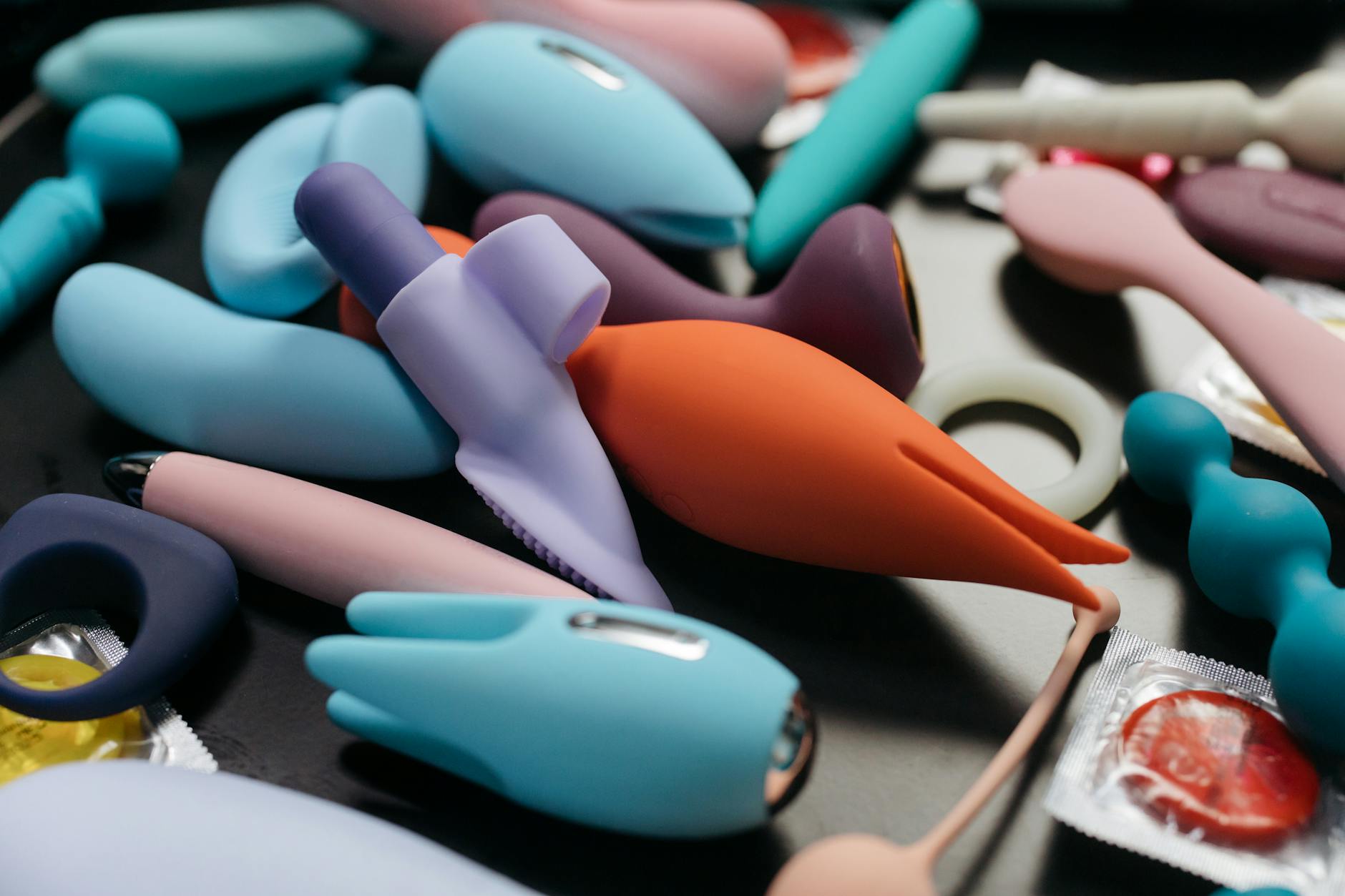
Let's name the actual problem first
When a partner says they're uncomfortable with toys, they're rarely actually talking about the toy. They're talking about something underneath it. Maybe they feel replaced. Maybe they think needing a vibrator means something's wrong with them. Maybe they're worried it means you're not satisfied. Maybe they never talked about sex openly with anyone before and the sight of a lemon vibrator triggers shame that has nothing to do with you.
The tool isn't the issue. The conversation is.
What uncomfortable really means
I've worked with couples where one partner wanted to introduce a lemon clitoral vibrator and the other said no immediately. In almost every case, the no wasn't about the vibrator itself. It was about five different fears all wearing the same coat:
Fear one: inadequacy. "If she needs a toy, I'm not enough." This is the biggest one. It feels true to the person experiencing it, even though it's completely wrong. A vibrator is not a replacement for a partner. It's a tool that can actually help you both feel better.
Fear two: weirdness. If no one in your family talked about sex openly, a lemon sexual toy might feel clinical or performative. Like you're doing something that "normal" couples don't do. Normal couples absolutely do this. Most of them just don't talk about it.
Fear three: loss of control. Some people find comfort in being the sole source of pleasure. A toy feels like losing that role. It's vulnerability disguised as preference.
Fear four: pressure. If your partner has struggled with desire or performance, they might worry that introducing a toy means you're frustrated. It can feel like criticism wrapped in silicone.
Fear five: shame. Sex toys still carry stigma for a lot of people, even if they're not sure why. It's less about logic and more about what they absorbed growing up.
The conversation before the toy
The mistake most couples make is trying to introduce the lemon adult toy too early, before the emotional groundwork is laid. You show them the vibrator and they immediately go defensive because they're hearing, "This is what I really want, and you're not it."
Instead, start with the conversation about pleasure, not the object.
Pick a time that's not in the bedroom. Not during foreplay. Not when clothes are off. Pick a normal Tuesday over tea or a car ride. Somewhere low-stakes where you can both think clearly.
Say something like: "I've been thinking about us and what feels good. I think I'd like to explore some new things together. Not because anything's wrong, but because I think it could feel really good for me and maybe for us. Would you be open to talking about that?"
Then listen. Your partner will likely say something from one of those five fears above. Don't defend. Don't explain why they're wrong. Just listen. Say, "I hear you. That makes sense." That's it.
Then say: "Here's what I actually want. I want to feel more pleasure. I want you to feel good knowing I feel good. And I think sometimes my body just needs something different, and that doesn't mean anything is broken about us."
Introducing the idea of lemon clitoral vibrators
Once they've heard you without defensiveness, you can introduce the tool. But frame it accurately.
Don't say: "I want to use this instead of you."
Do say: "I read that a lot of people use these to feel more sensation. I'm curious if it might help me. And if you wanted to be part of it, I think that could be fun for us."
The second phrasing does three things. It normalizes ("a lot of people"), it centers your curiosity (not judgment), and it invites them to participate (not replace).
Show them the actual lemon vibrator. Let them hold it. Let them see it's not a threat. It's a small silicone object. It has settings. It's as unsexy as a toothbrush until you use it.
Many partners' fear shrinks dramatically once they see the actual thing and realize how small and gentle it is.
Starting together, not alone
If your partner is uncomfortable, the worst move is to use the lemon sucker alone and then introduce the experience after. They'll feel excluded and it confirms every fear they had.
Instead, try this: "Would you be willing to just explore this together, no pressure? We could use it on you first, or we could just play around with it when we're intimate."
Take the performance pressure off. You're not using a lemon clitoral vibrator because you're trying to have an orgasm. You're experimenting. That's it.
Start with the lowest setting. Many partners who were uncomfortable feel relief when they realize how gentle it is. It doesn't feel medical or intense. It feels warm and curious.
If your partner wants to use it on you, let them. This is huge for rebuilding their confidence. They get to be the one introducing you to something new, which flips the dynamic. They're not being replaced. They're discovering with you.
What changes when you actually do this
I've seen couples go from "I hate the idea of toys" to "Actually, that was really good" in one session. Here's why.
When your partner realizes that using a lemon sexual toy doesn't end your relationship or make them obsolete, something releases. They stop bracing. They stop defending. And pleasure actually becomes possible.
Many partners also discover that they really enjoy watching their partner feel good. Turns out that's a pretty universal turn-on. Watching someone you care about experience pleasure is intimate in a different way than being the sole source of it.
You might find that the lemon vibrator becomes something you use together sometimes, and sometimes alone. Both are fine. The point was never to use it all the time. The point was to move past the block and back into curiosity.
The practical stuff that helps
Once your partner has agreed to try it, a few small things make a difference.
Keep it visible. Don't hide the lemon adult toy in a drawer like contraband. Leave it on the nightstand. Normalize it. Weirdness often comes from secrecy.
Let them control the introduction. "Do you want to try this now?" is different from surprising them. Give them agency.
Go slow. Start at the lowest setting. Let them see it's not aggressive. Intensity can always increase.
Use it with them present. At least the first few times. They're watching to see if this is weird or hot. Spoiler: it's usually hot.
Talk about it after. "That felt really good." "I liked watching you like that." These tiny comments rewire the story they were telling themselves.
When they're still resistant
Sometimes after an honest conversation, your partner still says no. That's real too, and it matters.
If the discomfort comes from trauma or shame that's bigger than this conversation, they might need a therapist. Not because something's wrong with them, but because the block isn't about you or the toy. It's about their own history.
If it's about core mismatched desires, that's a longer conversation about what you both need. A lemon clitoral vibrator won't fix relationship friction that's actually about connection.
But most of the time, once the fear is named and addressed, the resistance softens. Your partner realizes you're not trying to replace them. You're trying to feel better. And helping you feel better is something most partners actually want to do.
The thing about pleasure in a relationship
Here's what I tell couples in my practice. Pleasure is not zero-sum. Your partner's comfort with you exploring sensation with a tool doesn't take anything away from them. It adds something. It means you feel good. It means you're curious together. It means you're not stuck in shame or resentment about what feels off.
A lemon vibrator is just a tool. What matters is what it represents: you're allowed to feel good. Your partner wants you to feel good. You can explore that together without threat.
That changes everything.
People also ask
Will using a vibrator make my partner feel replaced?
Not if you frame it as exploration, not substitution. The key is involving them and being honest about what you actually want: more sensation, more pleasure, more connection. When your partner understands the tool is about you feeling better, not about them being inadequate, the dynamic shifts completely. Many partners actually enjoy the idea once they realize what's really happening.
How do I know if my partner's discomfort is a dealbreaker?
There's a difference between "I'm nervous about trying something new" and "I don't want you to feel good in ways I can't provide." The first one responds to conversation and exploration. The second one is deeper and might require a therapist to untangle. Listen to what your partner is actually saying underneath the no. Most of the time it's reachable. Sometimes it points to bigger misalignment that deserves attention.
Can we use a lemon sucker together, or does one person always go first?
Both work. Some couples use it together from the start. Some have one partner explore it alone first, then share the experience. Some use it during partnered sex and some use it solo. There's no right order. What matters is that it feels consensual and curious for both of you, not like a test or a demand.
What if my partner wants to use it on me but I'm nervous?
That's actually a beautiful moment. Your partner is saying yes, they want to participate. Start with the lowest setting. Stay in communication. "That feels good." "Let me show you where." This is how couples rebuild trust around pleasure. Go slow. There's no finish line.
Should I tell my partner I've already used a lemon clitoral vibrator alone?
Yes, if it comes up naturally. No, if you're using it as a bargaining chip or proof. If you mention it, frame it as curiosity, not as going behind their back. "I tried it out and I really liked it" is different from "I've been using this and hiding it from you." Honesty matters. Defensiveness doesn't.
How long before my partner stops being uncomfortable?
It varies. Some partners shift in one conversation. Some need three or four. Some need to experience it themselves before the discomfort releases. Be patient. You're asking someone to move past fear and conditioning. That doesn't happen on a timeline. It happens when they feel safe.