Let's talk about why lemon vibrators feel different
Here's the thing: not all vibrators deliver pleasure the same way. A traditional buzzing vibrator and a suction-based lemon clitoral vibrator activate your nervous system in completely different patterns. The difference isn't subtle. It's the reason some people swear by suction technology and others wonder why they ever bothered with anything else.
If you've noticed that lemon vibrators seem to deliver faster, more intense orgasms, you're not imagining it. There's actual neuroscience happening.
How suction stimulation differs from straight vibration
Most vibrators work through repetitive mechanical shaking. Your clitoris feels pressure and movement at a consistent frequency, usually anywhere from 40 to 100 cycles per second depending on the device. It works. People come.
But suction operates on a different principle entirely. Instead of pushing back and forth against tissue, air-pulse technology (which is what a lemon vibrator uses) creates a gentle seal around the clitoris and then rapidly pulses that pressure up and down. It's more like a soft mouth than a jackhammer.
Your clitoris has roughly 8,000 nerve endings concentrated in a space the size of a pea. Suction stimulates those nerves in a way that mimics the natural suction that happens during partnered sex. Your brain recognizes this pattern instantly. That recognition triggers a cascade of neural signals that moves faster than it would with unfamiliar vibration patterns.
Translation: your body doesn't have to "learn" what's happening. It already knows.
Why your nervous system responds faster to suction
When you introduce any new sensation to your body, there's a moment of processing. Your nervous system has to map the stimulus, figure out whether it's pleasurable, and decide to amp up arousal. This takes milliseconds, but it's real.
With suction, that processing step is shorter because your nervous system has prior context. You've experienced suction during oral sex, during kissing, during natural arousal responses. Your clitoris has decades of memory built around this sensation.
A lemon vibrator essentially shortcuts the neural pathway to pleasure. Instead of your brain having to translate an unfamiliar sensation into arousal, it recognizes the pattern and responds immediately.
Research on air-pulse devices shows they tend to produce orgasms in roughly half the time of traditional vibrators. Not because they're "stronger," but because they're more efficient. Your nervous system doesn't waste energy figuring out what's happening. It jumps straight to the good part.
The intensity difference is real, and here's why
Intensity in orgasm comes from two things: nerve activation and pelvic floor engagement. Most people focus on nerve activation, but the second part matters more than you'd think.
When suction stimulation is applied, your pelvic floor muscles contract more rhythmically and more completely than they typically do with vibration alone. These contractions happen in a coordinated pattern that mirrors what happens during partnered orgasms. Your body is doing what it's wired to do.
The result is a different kind of orgasm. Not necessarily "better," but often more full-body. The contractions extend deeper into your pelvic floor and further up into your abdomen and lower back. This is why people often describe suction orgasms as feeling more "complete."
For anyone with sensitive clitoral tissue, this efficiency is a gift. You get more sensation payoff with less direct pressure. A lemon clitoral vibrator's gentle suction means you're not grinding against your own tissue the way you might with a vibrator that operates through friction.
Why sensitive clits respond better to lemon vibrators
Sensitive clitoral tissue is, paradoxically, often the most responsive to suction. Here's why.
Sensitivity usually means your nerve endings are firing easily. That's good. But it also means direct vibration can feel overwhelming or even painful after a few minutes. Your nervous system gets overstimulated.
Suction distributes pressure across a wider area of tissue while creating a gentle rhythmic pulse. You're not bombarding one spot with repetitive force. Instead, you're creating a pattern of pressure and release that your tissue can absorb without fatigue.
This is why people who've had bad experiences with other clitoral vibrators often have success with a lemon vibrator. The technology isn't "stronger." It's gentler while somehow delivering more pleasure. That combination works wonders for sensitive tissue.
I've heard from countless people who switched to suction-based devices and stopped having the achiness or irritation that came with traditional vibrators. Their nervous systems finally had a tool that worked with their sensitivity instead of against it.
The role of pattern variation in sustained pleasure
Most lemon vibrators offer multiple suction patterns and intensity levels. This matters more than it sounds.
Your clitoris adapts to constant stimulation. If you hold the same vibration pattern at the same intensity for too long, the nerve endings become less responsive. This is called habituation, and it's why people sometimes feel like they need to keep turning up the intensity.
But if the pattern shifts every few seconds, or if you move between different intensities, habituation doesn't happen as quickly. Your nervous system stays engaged.
This is one reason why lemon sexual toys that offer varied patterns tend to produce more satisfying orgasms. You're not chasing the same sensation. You're riding waves of different sensations, each one fresh enough to keep your nervous system firing.
Building the ideal technique with a lemon suction vibrator
Just having the device isn't enough. How you use it changes everything.
Start with the gentlest suction level. Positioning matters more than intensity. Angle the device so it's hitting your clitoris directly, but not pressing so hard that you're uncomfortable. You want a seal, not a vice grip.
Let yourself sit with one pattern for 30 to 60 seconds before moving to the next one. This gives your nervous system time to really register what's happening. Then shift to a different pattern. The shift itself often feels incredible because your tissue was expecting one thing and suddenly gets something new.
Most people find they reach orgasm faster if they don't rush. Staying with each pattern long enough for arousal to build naturally, then switching, creates a momentum that carries you over the edge faster than chasing intensity.
The irony is that going slower with a lemon vibrator often leads to faster, more intense orgasms than rushing through intensities on a traditional device.
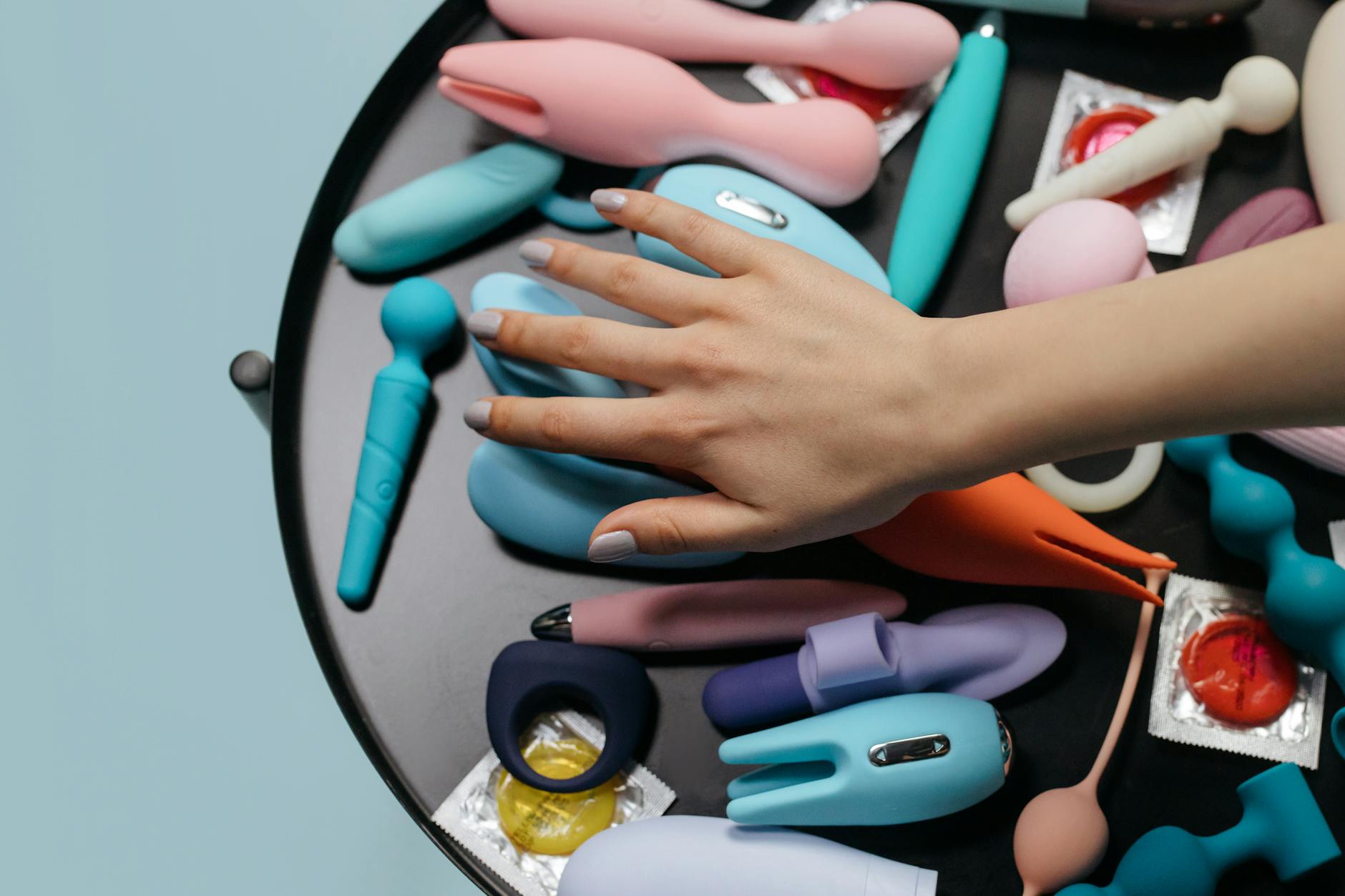
Photo by cottonbro studio on Pexels
What happens in your brain during suction orgasms
Functional MRI studies on orgasm show that suction-based stimulation activates the same pleasure centers as partnered sex does. This isn't true for all vibration patterns. Some traditional vibrators light up different neural pathways entirely.
When your brain recognizes a sensation as similar to partnered sex, it releases a different neurochemical cocktail. More oxytocin, more endorphins, different dopamine timing. This creates a qualitatively different experience from the orgasm produced by less "natural" stimulation patterns.
In practical terms, this means suction orgasms often feel more emotionally satisfying even if they're not physically "bigger." Your whole brain is involved, not just your genital sensory cortex.
This is why people describe suction orgasms as feeling more connected to their bodies, or more "real," compared to other vibrators. Your nervous system is genuinely experiencing something closer to what it evolved to experience.
The suction advantage for reaching orgasm during partnered sex
One reason lemon vibrators work better for couples is that they condition your body to respond to the kind of stimulation that actually happens during partnered sex.
If you spend years orgasming from intense direct vibration, your body gets trained to expect that pattern. Then when you're with a partner, the different sensations of actual sex feel... insufficient. You're not being primed for the right kind of stimulation.
But if you regularly use a lemon vibrator, you're training your body to recognize and respond to suction, which is much closer to what happens during oral sex. Your nervous system becomes fluent in that language. So when a partner uses their mouth, your body knows exactly what to do.
This is one reason why Why Lemon Vibrators Work Better for Long-Distance Couples so often report that adding a lemon vibrator to their solo sessions actually improved their in-person intimacy.
Recovery and sensitivity management with suction devices
Because suction distributes pressure so effectively, most people find they can use a lemon vibrator longer without irritation than they can with traditional vibrators.
That said, your clitoris still needs recovery time between sessions. If you're using any vibrator daily, you're asking your nervous system to fire repetitively in ways it might not be designed to sustain indefinitely.
Most people find that using a lemon clitoral vibrator 4 to 5 times a week, with at least one full rest day, keeps their sensitivity sharp without creating fatigue. Some people need more rest. Others can sustain daily use without issue.
Pay attention to your body. If orgasms start taking longer or feeling less intense, that's your signal to take a break. Even if you feel fine mentally, your nervous system is telling you it needs rest.
Combining lemon vibrators with other pleasure tools
Here's something many people don't realize: suction works beautifully alongside other kinds of stimulation.
You can use a lemon vibrator on the external clitoris while manually stimulating your G-spot or using penetrative stimulation. The suction handles one job while your hands or another device handle another. Your nervous system lights up in ways that single-stimulation orgasms simply don't match.
If you're new to combining sensations, start with low suction intensity on the lemon vibrator, then add other stimulation slowly. You want to build arousal in layers, not shock your system with everything at once.
FAQ: Your questions about suction vibrators and intense orgasms
Why do lemon vibrators sometimes feel numb after a few minutes?
That's habituation, the same thing that happens with any stimulation. Your nervous system adapts to consistent input. The solution isn't turning up the intensity, it's changing the pattern. If your lemon vibrator has multiple settings, switch between them every 30 to 60 seconds. The variation keeps your nerve endings engaged.
Can you become dependent on a suction vibrator for orgasms?
Not in the way people fear. Your body doesn't "forget" how to have partnered orgasms because you use a vibrator. But your nervous system can become conditioned to respond more readily to familiar patterns. The solution is variety, not abstinence. Use your lemon vibrator alongside different kinds of partnered sex and solo exploration so your body stays fluent in multiple languages.
How does suction compare to vibration for people on antidepressants?
Many SSRIs can reduce sensitivity and slow orgasm, which is frustrating. Suction technology is often more effective than vibration for people on these medications because it activates different neural pathways and tends to produce faster responses. If you're struggling with medications and pleasure, a lemon vibrator is worth trying before assuming the medication is the permanent problem.
Will using a suction vibrator too much desensitize my clitoris?
Desensitization is mostly about overstimulation, not about the tool itself. The clitoris is designed to handle consistent sexual activity. What matters is rest, variation, and listening to your body's signals. Take rest days, change patterns, and stop if things start feeling numb or uncomfortable. Your body will tell you if it needs a break.
Can you use a lemon clitoral vibrator during menstruation?
Absolutely. Many people find that during menstruation, suction feels even better because increased blood flow makes the tissue more responsive. Use the same hygiene practices you would with partnered sex (you can keep it in longer if your vibrator is waterproof). Some people report that orgasms during menstruation feel more intense, partly because of the increased tissue sensitivity.
What's the difference between a lemon vibrator and other air-pulse devices?
The main difference is design and engineering. A quality lemon vibrator is specifically shaped to create an efficient seal and deliver pulsed suction at frequencies that research shows are optimal for the clitoris. Some air-pulse devices are less thoughtfully designed. Investing in a well-engineered device matters. It's the difference between a tool that works and one that just buzzes.
Here's what actually matters
Intense orgasms aren't about finding the strongest device. They're about finding the device that speaks your body's language. For most people, especially those with sensitive tissue, suction-based lemon vibrators offer that fluency in a way traditional vibrators don't.
Your nervous system has been primed by decades of experience with suction. A lemon vibrator taps into that history. It shortcuts the processing step and delivers you straight to pleasure.
If you've been using traditional vibrators and feeling like something's missing, this is worth exploring. Your body might be waiting for someone to speak its actual language.
Ready to see if suction changes your experience? Reach out with questions at /contact, or explore what works for you with patience and attention. Your pleasure is worth the experimentation.