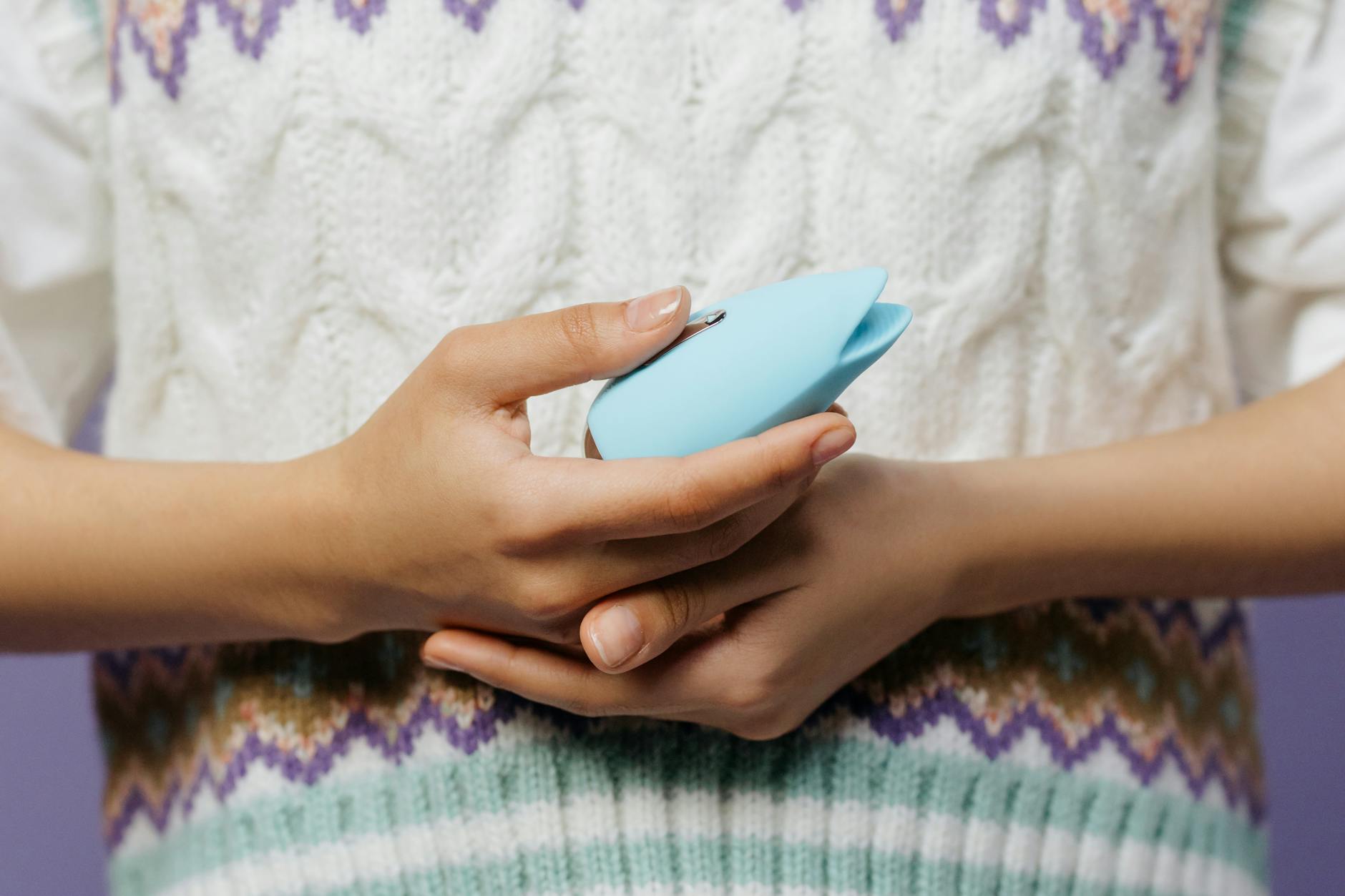
Let's name the thing nobody talks about
Divorce ends a marriage. It also rewires pleasure. You might pick up a lemon clitoral vibrator months or years after your split and find that something feels completely off. It's not broken, and neither are you. Your nervous system just went through something enormous, and pleasure works differently now.
Here's what I tell clients in my practice: the physical capacity for orgasm often doesn't change much after divorce. But the emotional scaffolding around it? That rebuilds from scratch. Understanding the difference between the two is the whole game.
What actually changes after divorce
Three things happen at once, and they're easy to confuse:
The nervous system shift. During a marriage, even one that wasn't working, your body adapted to a particular rhythm of stress, touch, and emotional regulation. Your partner was your primary source of physical contact, whether that felt good or complicated. Divorce severs that input. Your nervous system doesn't know what normal is anymore.
The meaning crisis. Pleasure used to happen in a context. Now it doesn't. That lemon vibrator might trigger memories of your partner, your body as it was in the marriage, or a version of yourself you're not sure exists anymore. The tool itself is fine. The landscape around it changed.
The identity recalibration. You were someone's spouse. Now you're not. That's not just an emotional fact. It's also a sensory one. Your body may not feel like it's yours yet because you spent years in partnership with someone else's preferences, patterns, and presence.
Why your body might feel numb
This is the one I see most. Women come back to touch months post-divorce and report that clitoral vibrators feel distant, muffled, or just not there. Here's why:
During acute stress or grief, your brain downregulates sensation as a protective mechanism. It's doing exactly what it should. Numbness isn't a sign that you're broken. It's a sign that you're processing something genuinely difficult. That lemon sexual toy isn't failing. Your system is temporarily unavailable.
The other culprit is guilt. Many people carry complicated feelings about pleasure after divorce. If you initiated it, there's often a flash of "I shouldn't be enjoying myself." If your partner did, there's sometimes shame baked into solo pleasure, as if pleasure was something you were supposed to share. Your body picks up on that and shuts down.
Give it time. Not years, usually. Weeks to a few months of gentle, no-pressure exploration. Your nervous system will come back online.
Why speed and intensity feel different
You might notice that your lemon clitoral vibrator feels too strong, or that you need way more stimulation than you used to. Both are normal responses to divorce.
If it feels too intense: you're probably more sensitive to sensation right now because your nervous system is in a lower baseline state. Start at the lowest setting. Seriously. The Lem or any quality lemon vibrator has patterns, and pattern 1 is not a consolation prize. It's often more useful here than power ever was.
If it feels muffled: this usually means you need longer warm-up time. Arousal takes longer to build when you're grieving or processing identity shifts. Give yourself 20 to 30 minutes of mental and physical settling before you expect sensation to register. No rush.
The emotional work underneath
Here's where most pleasure-rebuilding advice falls short. People talk about technique, lubrication, and positioning. What they skip is the fact that pleasure after divorce requires you to answer some hard questions first:
- Are you touching yourself because you want to, or because you think you're supposed to?
- What do you need your body to feel like right now? (Safe? Alive? Yours?)
- Is there grief or anger that needs to move through your body before pleasure can?
I often recommend that clients start with non-sexual touch first. A lemon sucker or any clitoral vibrator can wait. Massage your own hands, take long baths, sleep naked, notice what your skin needs. This isn't procrastination. It's scaffolding. You're rebuilding the capacity to feel your own body as your own.
Once that's solid, the vibrator becomes a tool for rediscovery rather than a pressure to perform.
What doesn't actually change
Your nerve endings didn't leave. Your clitoral sensitivity is still there. The capacity for orgasm is still intact. You're not less sexual because you're single. You're not broken because touch feels weird right now.
Many of my clients report that once they get past the initial phase, they experience pleasure differently after divorce. Deeper. More selfish in the best way. You're not managing anyone else's experience anymore. You're not performing. You're just feeling what you feel.
That shifts everything.
How to start again (actually, practically)
Four things that work:
Start with exploration, not goals. Don't go in trying to have an orgasm. That adds pressure your nervous system doesn't need. Try your lemon vibrator on different parts of your body. Experiment with settings and patterns at a totally different pace than you used to. Boredom is fine. Curiosity is the goal.
Use lube even if you don't think you need it. Post-divorce, your natural lubrication might be lighter because arousal takes longer to build. Water-based lube removes friction and makes sensation clearer, which helps your nervous system recognize pleasure again. It's not a sign you're broken. It's a tool.
Set a time boundary. Give yourself permission to stop after 10 minutes, or 30 minutes, whenever. The point is to make solo pleasure feel like something you choose, not something you owe yourself or have to achieve. That choice is what rebuilds the sense of your body as yours.
Expect waves, not a line. Some weeks touching yourself will feel amazing. Other weeks it will feel neutral or hard. That's completely normal post-divorce. You're not backsliding. You're healing in the actual way it happens, which is messy and non-linear.
When to talk to someone
If numbness lasts longer than six months, talk to a therapist trained in somatic work or attachment. If you're experiencing pain where there wasn't any before, see a pelvic floor specialist. If pleasure feels deeply complicated to guilt or shame, that's also worth exploring with someone trained in trauma work.
But most of the time, what feels broken after divorce just needs time, patience, and the understanding that your body is actually doing exactly what it should be doing. It's grieving. It's reorganizing. And when you're ready, it will absolutely come back online.
People also ask
How long does it usually take for pleasure to feel normal again after divorce?
There's no universal timeline, but most people I work with report a significant shift around the 6 to 12 month mark post-separation. The nervous system takes time to recalibrate. Some feel reconnected to pleasure in weeks, others take a year or more. What matters isn't the speed. It's that you're moving in the direction of ownership over your own experience. How to Use a Lemon Vibrator When You're Just Getting Started Again After Years Away covers similar ground if you've had a longer gap.
Is it normal to feel guilty about using a vibrator after divorce?
Completely normal. You spent years in a partnered context, and pleasure became intertwined with that. Your nervous system is asking: "Am I allowed to have this just for me?" The answer is yes. That guilt usually softens once you realize that solo pleasure isn't a replacement for partnership. It's a foundation. You rebuild the capacity to know what you like, what your body needs, and what feels good when there's no one else involved. That's not selfish. It's essential.
Can using a lemon vibrator bring up emotions or trauma during or after use?
Yes, and it's worth expecting. Your body stores emotion. When you're in a heightened state of physical sensation, old grief, rage, or sadness can surface. That's not a sign to stop. It's often a sign that your nervous system is finally safe enough to process something. If you find yourself crying or feeling intense emotion during solo pleasure, that's okay. Let it move through. If it's overwhelming, slow down and talk to a therapist who works with body-based trauma.
Does divorce affect orgasm quality or the ability to orgasm at all?
Not directly. Your physiology doesn't change. But the emotional context does, and that absolutely affects how easily you orgasm and how it feels. Some people find orgasms come faster post-divorce because there's less performance pressure. Others find it takes longer because the meaning around pleasure has shifted. Both are completely normal. The lemon clitoral vibrator itself works the same way. Your experience of it just has a different emotional texture now.
What if my ex used to control or criticize my pleasure during the marriage?
This one requires particular attention. If pleasure was a site of control or shame in your marriage, reconnecting solo is genuinely healing work, not just fun. I'd recommend working with a therapist alongside your exploration. You might find that using tools like a lemon sucker or any clitoral vibrator feels empowering the first time because you're reclaiming something. You also might find it brings up anger or violation. Both are valid. The tool becomes a way to practice agency. Your pleasure, your choice, your body. That reclamation is slow sometimes, but it matters.
How do I know if what I'm feeling is normal healing or if I need professional support?
Trust your gut. If you're experiencing numbness that doesn't shift after six months, persistent pain, or intense shame or trauma responses around pleasure, talk to someone. A somatic therapist, sex therapist, or trauma-informed counselor can help you understand what's happening and move through it. This isn't weakness. It's wisdom. Divorce is major. Your body deserves professional support if you need it.
What comes next
Divorce is the end of a chapter and the beginning of one you get to write entirely by yourself. That's terrifying and also liberating. Your body will catch up to that liberation eventually. A lemon vibrator, whether it's the Lem or another clitoral vibrator you choose, becomes a tool for that rediscovery when the time is right. Not before. Not on anyone's timeline but your own.
Your pleasure matters. Solo, partnered, alone in a room with a vibrator that makes you feel alive. All of it counts. All of it's yours to claim.
If you're navigating this transition and want personalized guidance, reach out. You don't have to figure this out alone.