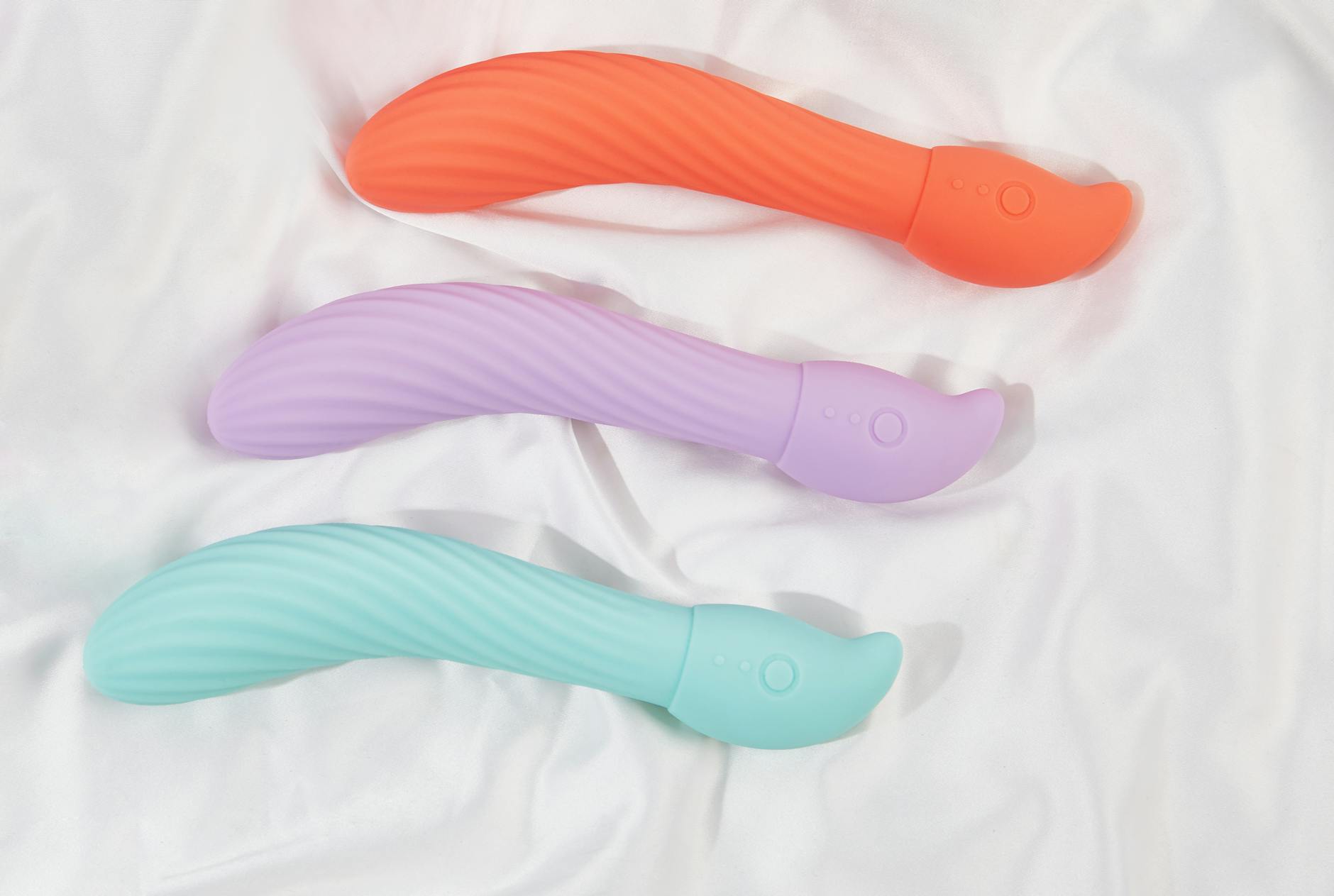
Let's talk about the obvious thing nobody mentions
Your lemon vibrator doesn't change. But the way your body responds to it absolutely does. If you've noticed that the exact same clitoral vibrator feels wildly different from week to week, you're not imagining it. Your hormones are literally rewiring how your nervous system processes sensation.
This isn't complicated biology dressed up as an excuse. It's neuroscience that directly shapes your pleasure. And once you understand it, you can actually use it.
The menstrual phase: sensitivity is high, patience is low
The first few days after your period starts, estrogen and progesterone are both at their lowest. What does that mean for pleasure?
Your clitoral tissue is less engorged. Blood flow is focused elsewhere in your body as you shed the uterine lining. This means direct sensation feels sharper, sometimes too sharp. Many people report that their usual intensity setting on a lemon sucker or vibrator feels almost aggressive during menstruation.
But here's the counterintuitive part: arousal happens faster. Your dopamine is rising and your body is primed to rebuild energy. You might find yourself wanting touch more, even as the touch itself needs to be gentler.
What to do: Drop down one intensity level on your Lem vibrator if you normally use pattern 3 or higher. Start with the softer suction patterns. You might also find that longer foreplay doesn't apply here. Your body knows what it wants quickly. Honor that speed instead of defaulting to the 15-minute warm-up you might need in other phases.
The follicular phase: here's where you get bold
From the end of menstruation through ovulation, estrogen is climbing steadily. Your tissue is becoming more engorged. Blood flow to your vulva increases. Your clitoris is literally getting bigger and more sensitive to subtle variations in stimulation.
This is also when your baseline dopamine is highest. You have more energy. You're more likely to want novelty, different patterns, different intensities. Some people describe this week as their "horny week," and the neurobiology backs that up.
Here's what changes physically: your arousal ramp gets steeper. You go from zero to sensation faster. Your threshold for pleasure increases, which means you can handle higher intensities without it feeling overwhelming. Some people find they can reach orgasm from patterns they find too subtle during other phases.
This is the sweet spot for trying new clitoral vibrators or testing out that intensity level you've been nervous about. Your nervous system is literally more tolerant of variation right now.
Ovulation: peak sensation, peak desire
Right around day 14 of a typical 28-day cycle, estrogen peaks. Then it drops suddenly, which triggers the LH surge that releases an egg. For 24-48 hours, you're in a neurochemical sweet spot that doesn't happen any other time in your cycle.
Estrogen is high, which means maximum tissue engorgement and clitoral sensitivity. Testosterone surges at the same time, which boosts desire and the intensity of orgasm. You also have high dopamine and rising oxytocin, which together create that perfect storm of wanting touch and being able to feel it acutely.
The practical truth: this is when a lemon vibrator or any clitoral vibrator will probably feel the best. Not because the device changed, but because your nervous system is optimized for pleasure right now. Your orgasms may feel stronger. Your arousal may be effortless. Your sensitivity to subtle patterns might actually be higher than during the follicular phase, even though you have more overall capacity for intensity.
Many people find they can have multiple orgasms during ovulation more easily. The refractory period shortens. Your body rebounds faster.
What to do: If you're curious about your own pleasure or you want to really dial in what works for you, track your experience during ovulation. This is your baseline. Everything else is a variation of this.
The luteal phase: intensity needs to rise, patience needs space
After ovulation, progesterone starts climbing. It stays high for about 12-14 days. During this time, your basal metabolic rate increases, your mood can shift, and your pleasure sensitivity actually changes in a way that surprises people.
Progesterone is a calming hormone. It dampens dopamine and serotonin slightly. Your clitoral tissue begins to reduce engorgement as estrogen normalizes to baseline. This means that the same vibration pattern that felt perfect during ovulation might feel subtle, even boring, now.
Many people find they need higher intensity during the luteal phase. Not because something is wrong, but because your nervous system is less reactive to delicate sensation. You might need the stronger suction patterns on your Hello Nancy lemon clitoral vibrator. You might want longer sessions or more direct pressure.
Here's the emotional piece that matters: progesterone also increases your need for rest and your sensitivity to overstimulation. This is a phase where you might want pleasure, but in shorter, more intentional bursts. You don't necessarily want the extended foreplay. You might want intensity, release, and rest.
Some people also experience what feels like numbness or dissociation during this phase, especially in the days right before menstruation. This is partially progesterone and partially a real dopamine dip. That's not your vibrator failing you. That's your biochemistry asking you to slow down.
Pattern sensitivity: why your favorite setting changes
Beyond intensity, the way your clitoris responds to different vibration patterns shifts too. Some people find that they prefer steady vibration during menstruation and ovulation, but want pulsing or waves during the luteal phase because the variation keeps their nervous system engaged longer.
Others find the opposite. The key is that you're not broken if you need different patterns at different times. You're responsive. Track what you reach for during each phase. You'll probably notice a pattern.
If you're using a device like the Lem, experiment with different pattern combinations on different days. You might discover that pattern 2 steady feels perfect one week and underwhelming the next. That's not malfunction. That's you learning your own cycle.
The emotional consent piece
Beyond the physical changes, your psychological relationship to pleasure shifts across your cycle too. During high-estrogen phases, you might have more spontaneous desire. You might initiate more. You might be game for longer sessions.
During the luteal phase, you might need more explicit desire or intentional setup. You might not want foreplay. You might want to know exactly what's going to happen. That's not less pleasure. It's different pleasure.
The mistake most people make is assuming their cycle means something is wrong with them or with their device. It doesn't. It means your body is communicating what it actually wants right now. Listen to that.
Tracking your own experience
You don't need a complicated app, though apps help some people. Here's what actually matters: note the date, where you are in your cycle, what intensity or pattern you reached for, and how it felt. After three cycles of notes, you'll see your own pattern emerge. Some people have dramatic shifts. Others have subtle ones.
The point isn't to optimize every sensation. It's to stop fighting your body and start working with it. Once you know that your clitoral vibrator is going to feel different during ovulation than it does right before your period, you're not surprised. You're prepared. You know what to reach for.
Your pleasure deserves that level of attention.
FAQ: Cycle-phase sensitivity and clitoral vibrators
Why does my lemon vibrator feel numb sometimes but incredible other times?
Progesterone sensitivity and clitoral engorgement change throughout your cycle. When estrogen is low (early menstrual phase and late luteal phase), your clitoral tissue has less blood flow and you're biochemically less reactive to subtle sensation. The same vibrator isn't numb. Your nervous system is just less responsive to it. During high-estrogen phases, the same device will feel more intense because your tissue is engorged and your dopamine is higher. This is completely normal and reversible.
Can cycle tracking help me choose a better clitoral vibrator?
Absolutely. If you notice you need higher intensity during certain phases, you might benefit from a device with more power options. If you find you need different patterns, a multi-pattern vibrator gives you flexibility. Track what you actually reach for during your high-desire and low-desire phases. That data tells you what features matter most. For sensitive tissue that changes with your cycle, a lemon sucker's gentler suction can actually be easier to modulate than traditional vibration.
Is it normal to want no stimulation during my luteal phase?
Completely normal. Progesterone increases your threshold for stimulation and also increases your need for rest. Some phases you'll want intense pleasure. Other phases you might want gentle touch or no touch at all. Both are valid responses to your hormones. You're not broken or less sexual. You're cycling through different neurochemical states. Your desire isn't constant, and that's healthy.
Does the luteal phase mean I can't orgasm as easily?
Not necessarily. You might orgasm differently, but not less. Some people find that luteal-phase orgasms feel more internal or full-body compared to the sharp clitoral release of ovulation. You might need higher intensity to trigger one, or you might need longer warm-up. But plenty of people have powerful luteal-phase orgasms. The intensity or ease just shifted, not disappeared.
Should I change my vibrator settings based on my cycle?
Yes, experiment. If you use a Hello Nancy lemon vibrator with multiple intensity levels and patterns, track what pattern number and setting you actually choose on different days. Most people naturally gravitate toward higher intensity during the luteal phase and lower intensity during menstruation. You're not doing it wrong if your preferences shift. You're adapting to your body.
Can hormonal birth control affect how clitoral vibrators feel?
Yes. Hormonal contraceptives suppress the natural cycle, which means you don't get the same peaks and dips in estrogen and progesterone. Some people on hormonal birth control report more consistent pleasure sensation throughout the month. Others report less, because the peaks are flattened. If you notice your pleasure patterns feel different after starting or stopping hormonal contraception, that's not your vibrator changing. That's your hormonal environment stabilizing or destabilizing.
The actual takeaway
Your lemon vibrator is not inconsistent. You are cycling. That's not a flaw in your body or in the device. It's information. Once you start reading it, you stop feeling broken and start feeling resourced. You know what to reach for. You know what to expect. You know that the phase when you need higher intensity will come around again.
Your pleasure matters enough to pay attention to.