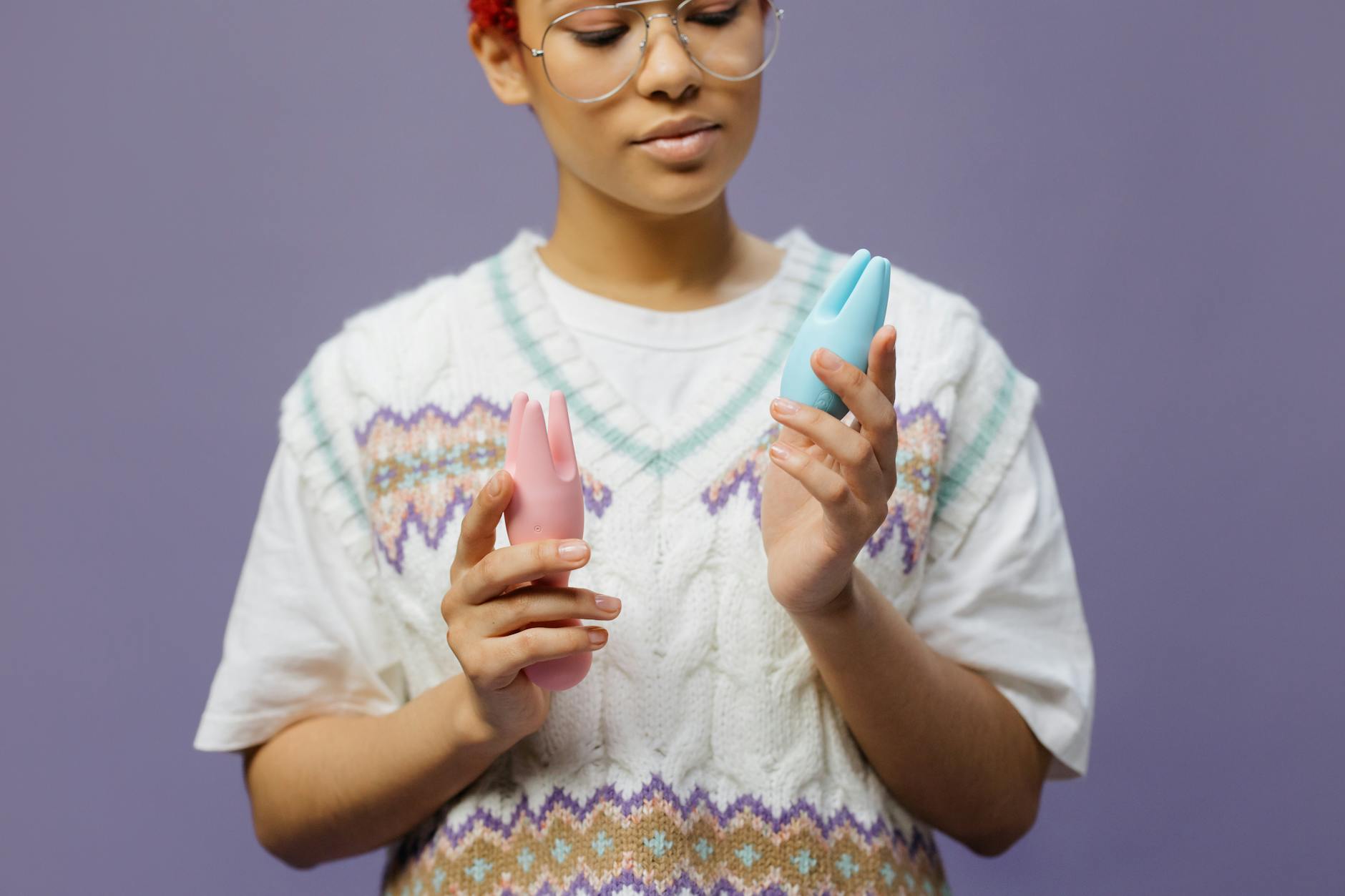
Why Lemon Vibrators Feel Different on Antidepressants and What Helps
Let's be real: antidepressants save lives. They also, sometimes, make orgasms harder to have. And that's not a small thing when pleasure matters to you.
The reason this happens is neurological, not psychological. Your medication is doing exactly what it's supposed to do. The fact that it's also changing how your lemon vibrator feels is a side effect worth understanding, not a reason to abandon either one.
How antidepressants actually affect arousal and orgasm
SSRIs (selective serotonin reuptake inhibitors) like sertraline, fluoxetine, and escitalopram work by keeping serotonin in your brain longer. That's what stabilizes mood. But serotonin doesn't just live in your brain. It's also in your gut, your blood vessels, and all through your nervous system, including the parts that control sexual response.
When you have more serotonin available, a few things shift:
Your arousal threshold changes. It takes more stimulation to trigger the cascade that leads to orgasm. Some people notice they feel less aroused overall. Others feel fine mentally but their body takes longer to respond. Both are normal.
Your orgasm itself can feel different. Some people report flatter, quieter orgasms. Others say they're still intense but harder to reach. A few say their orgasms disappeared entirely, which is rarer but does happen with some medications or dosages.
Lubrication can decrease. Not because your body is broken, but because serotonin affects blood flow and vascular response. Less blood flow to genital tissue means less natural lubrication.
The thing nobody tells you: this usually isn't permanent. Your body often adapts within a few months. But in the meantime, your lemon vibrator might feel like it's working differently because your body is actually responding differently.
Why lemon clitoral vibrators help more than you'd expect
Here's where it gets interesting. A lemon vibrator, with its focused suction and air-pulse technology, works differently than conventional vibration. Instead of relying entirely on friction or broad vibration (which can feel muted if your sensitivity is suppressed), suction creates a seal and stimulates through gentle pressure changes.
That matters when your nervous system is running a bit quieter. Suction vibrators like the Lem bypass some of the friction-dependent response and engage the nerve endings through a different pathway. For people on SSRIs, this often means more reliable sensation and easier orgasms than with traditional clitoral vibrators.
You're not imagining it if a lemon sucker feels more effective than your last toy. The mechanism is genuinely better suited to a medicated body.
What typically happens in the first three months
Week one to three: Side effects often peak. Some people experience temporary loss of orgasm entirely. This usually recovers.
Month one to three: Your body begins to adapt. Sensation might start returning. Arousal time might shorten a bit. This is where many people notice their lemon vibrator starting to feel more responsive again.
Months three and beyond: For most people, sexual function stabilizes at a new baseline. It may not be identical to pre-medication, but it becomes predictable. You learn what works.
If you're past month four and nothing has improved, or if the changes feel unbearable, that's worth discussing with your prescriber. There are options: dose adjustment, switching medications, taking a medication holiday on weekends (if your doctor approves), or adding other medications to counteract sexual side effects.
The practical adjustments that actually work
I recommend these changes to nearly everyone managing antidepressants and pleasure:
Start with lubrication. Use a water-based lube even if you don't think you need it. The goal isn't to mask a problem. It's to remove friction as a variable so you can focus on sensation. Fewer obstacles means easier arousal and faster response.
Extend your warm-up time. If you usually reach for your lemon vibrator after five minutes of foreplay, try fifteen. Your body isn't broken. It just needs more runway. This isn't a failure. It's adaptation.
Prioritize comfort and privacy. Anxiety about "Will this work today?" will torpedo your chances faster than medication ever could. Give yourself permission to take time. The pressure to perform kills pleasure more reliably than any SSRI.
Use your lemon vibrator on lower patterns first. Start at intensity one or two and work up. You might find you don't need the highest setting. Many people on antidepressants report that gentle, sustained suction works better than aggressive vibration.
Consider timing. Some SSRIs peak in effectiveness at certain times of day. If you take your medication in the morning, you might notice better sexual response in the afternoon. Experiment and note what you find.
When medication might need to change
Not all antidepressants affect sexual function equally. If you're three months in and absolutely nothing is helping, talk to your prescriber about alternatives. Some SSRIs (like sertraline) tend to have worse sexual side effects. Others (like bupropion) often improve libido. Switching might be an option.
If you're thinking about stopping your medication to restore sexual function, please don't without professional guidance. Depression returning is worse for your sex life than any side effect. But your doctor can help you find a path that supports both your mental and sexual health.
The conversation you might need to have with a partner
If you're coupled, your partner needs to understand that this isn't about attraction. It's not about them. Your arousal changes are a direct effect of your neurochemistry. Some partners interpret slower response as rejection. It's not. It's pharmacology.
The best thing you can do is separate the two conversations. "I'm taking medication that affects how quickly my body responds" is not the same as "I'm less attracted to you." Say that out loud. Say it more than once. Then collaborate on what helps. Maybe your partner uses a lemon vibrator with you. Maybe you explore new timing. Maybe you accept that some days are lower-response days and that's fine.
Partner anxiety about performance can actually make your medicated body even slower to respond. Creating safety and removing pressure is half the solution right there.
The often-missed piece: pelvic floor tension
Anxiety about sexual side effects often creates tension in the pelvic floor. You're worried it won't work, so you grip. That tension makes everything harder. Your lemon clitoral vibrator has to work against your own clenching.
Spend time just relaxing that area. Breathe into it. You might even try gentle internal massage or pelvic floor physical therapy if you have access. Ironically, the more you relax your pelvic floor, the easier your body can respond to medication-muted signals. You're not fighting biology. You're clearing the path.
People also ask
How long does it take for antidepressants to stop affecting orgasms? For most people, adaptation happens within three to four months. Some people notice improvement earlier. A few take longer. If you're past six months with no change, your body may have settled at this new baseline rather than improving further. That's when you talk to your prescriber about alternatives.
Will using my lemon vibrator more often help my body adapt faster? No. In fact, less pressure is better. If you're struggling to orgasm, frequent attempts can increase anxiety and frustration, which makes arousal harder. Once or twice weekly is better. Quality over frequency.
Can I take a medication holiday on weekends to have better sex? Maybe, but only with your doctor's explicit approval. Some medications allow this. Others create rebound symptoms if you skip doses. Never experiment on your own. If your sexual side effects are severe enough to consider this, bring it to your prescriber.
Does every antidepressant affect sexual function? Most SSRIs do, to varying degrees. Bupropion (Wellbutrin) often improves libido. SNRIs (like venlafaxine) have mixed effects. Your specific medication matters. Don't assume you're broken. Assume your medication class might benefit from a conversation with your doctor about alternatives.
Is it normal to feel less interested in my lemon vibrator on antidepressants? Yes. Low desire is a separate side effect from difficulty with orgasm. Some people experience both. If desire has completely flatlined, mention it to your prescriber. Low desire sometimes responds to dose adjustment or medication change. Sometimes it responds to simply lowering the pressure and approaching pleasure more gently.
Should I tell my doctor I'm having sexual side effects if I'm embarrassed? Absolutely tell them. Your doctor has heard this a thousand times. Sexual function is health. If your medication is working for your mood but destroying your sex life, that's information your prescriber needs. You deserve support managing both.
The bottom line
Antidepressants and pleasure don't have to be enemies. Your body isn't broken. Your medication is doing what it's designed to do. But there's a gap between that and orgasm, and you can work with it instead of against it.
A lemon clitoral vibrator can be part of that solution. So can patience, lubrication, longer warm-up, pelvic floor relaxation, and conversations with both your prescriber and your partner. Most importantly, you deserve pleasure on whatever timeline your body needs. The fact that it's slower doesn't make it less real.
If you're struggling, you're not alone. And the answer usually isn't to choose between your mental health and your sex life. It's to give yourself grace while your body adjusts, and to reach out for support when you need it.