Let's talk about the mismatch nobody plans for
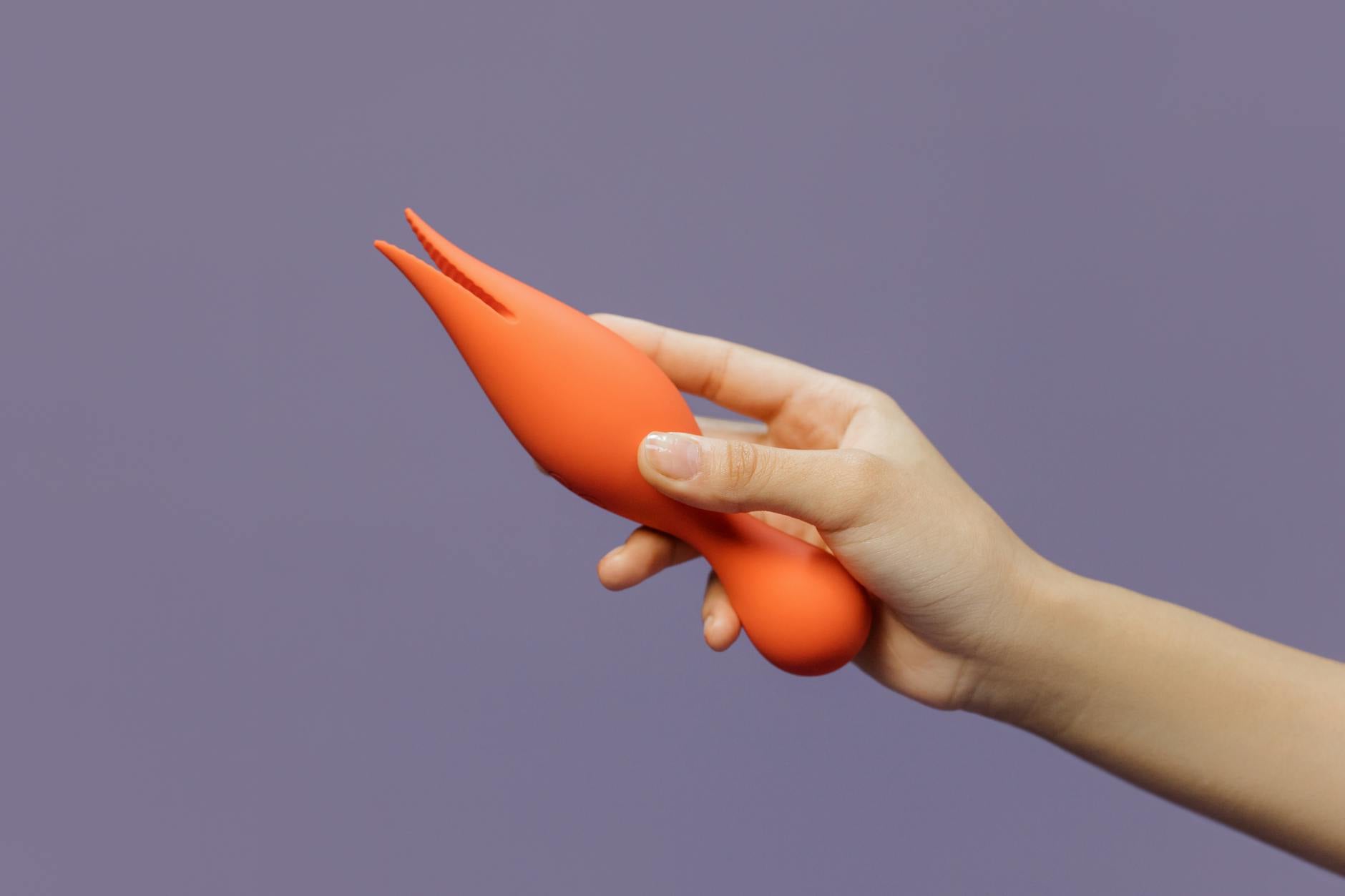
You're ready in five minutes. Your partner needs twenty. Or the reverse. One of you wants maximum intensity right away, the other needs to build slowly, and somewhere in that gap, a lemon clitoral vibrator sits unused because you can't figure out how to use it together without one of you feeling rushed or bored.
This is one of the most common friction points couples face, and it's fixable. The key is learning how to use the different settings, patterns, and pacing of a lemon vibrator in a way that works for both arousal styles instead of forcing one of you into the other's rhythm.
Why arousal mismatch happens (and why it's totally normal)
First, the biology. Arousal speed isn't a character flaw or a sign of mismatched desire. It's physiology. Some bodies have naturally higher baseline sensitivity, faster blood flow to the genitals, or more responsive nerve endings. Hormones also shift what "normal" arousal looks like month to month, year to year, especially as you move through different life stages.
Second, psychology matters as much as physiology. One partner might have learned to associate sexuality with efficiency (get it done, don't waste time). Another might need mental transition time, sensory input, or emotional connection to shift into arousal. Neither is wrong. They're just different neural pathways.
When you add a lemon vibrator into the mix, the tool can actually amplify the mismatch if you're not intentional about how you're using it. The person who aroused quickly might jump straight to pattern 6 on the Lem and expect the same intensity from their partner. The person who needs time might feel pressured by the buzzing, skipped steps, and impatience.
How to match patterns to arousal style
A lemon vibrator like the Lem has multiple patterns and intensity levels. Use that. Here's how to map them to different arousal styles:
The rapid-arousal partner
You're the one who's ready in five minutes. Your nervous system spins up quickly, and you might naturally gravitate toward higher patterns and intensities. Here's what helps:
Start with patterns 1 or 2 even if you don't feel like you need them. I know it feels slow. Do it anyway. The build-up creates anticipation, which deepens the orgasm when it comes. Rushing to pattern 5 means you're already at peak intensity with nowhere to go.
Use the first ten minutes of partnered time to focus on your partner's body, not your own sensation. Touch, kiss, explore. Let the vibrator take a back seat while you do the mental and emotional work of bringing them into arousal. This isn't self-sacrifice. This is actually setting yourself up for better sex, because your partner will be more present and responsive once they're actually aroused.
If you're the one holding the Lem, you control the pacing. Give your partner time to feel each pattern for a full minute or two before you shift up. You're not trying to finish the job. You're building layers.
The slow-burn partner
You're the one who needs time, mental space, or specific conditions to shift into arousal. This is equally valid. Your arousal style is not "broken" or "slow." It's just different.
Communicate your optimal pacing. Don't assume your partner knows. Say something like: "I need about 15 minutes of foreplay before a vibrator feels good. I want pattern 2 or 3, not the high settings, until I signal I'm ready for more."
Use lower patterns (1 through 3) as your baseline even if it feels gentle. Gentle doesn't mean weak. The Lem's suction technology works at lower intensities. You'll notice sensation without the overwhelming input that can make arousal harder to build.
Ask your partner to stay engaged while you're arousing. If they're just waiting for you to "catch up," you'll feel the pressure and take even longer. Have them touch you, talk to you, stay present. This closes the gap between you.
Practical timing strategies for couples
Timing is where most couples fail, not because they lack desire, but because they don't plan. Here are three real strategies:
The foreplay sandwich
Begin with 10 to 15 minutes of non-vibrational foreplay. Touch, kissing, whatever you both enjoy. Use this time to sync up emotionally and start bringing your nervous systems online. Introduce the Lem in the middle of this window, starting with low patterns while foreplay continues. End with more intensity as both partners are ready. The vibrator isn't the entire experience. It's the middle layer.
The sync check
Before you introduce the Lem, check in: "Where are you right now on arousal?" Use a simple scale. "I'm at a three, you?" This gives you real data instead of assumptions. If one person is at a two and the other is at a seven, you know you've got work to do before the vibrator comes out. Five minutes of foreplay can shrink that gap significantly.
The pacing hand signal
During vibrator use, establish a nonverbal signal for "speed up the intensity" and "stay here for a minute." A squeeze of the hand, a specific word, or a tap on the arm. This removes the guesswork. Your partner doesn't have to wonder if you want more or need them to hold steady. You communicate your arousal in real time.
Pattern selection based on what your body needs
The Lem has distinct patterns. Here's how different bodies respond:
If you have reduced sensitivity or need stronger input to reach orgasm, don't skip straight to the highest pattern. Instead, spend time on patterns 4 through 6 with consistent, uninterrupted contact. Let your nervous system acclimate to the sensation. Most people with desensitization actually need steady, sustained patterns more than they need intensity spikes.
If you're sensitive or prone to overstimulation, patterns 1 and 2 might be your home base. Explore pattern 3 occasionally, but know your limit. There's no prize for pushing into discomfort. Better to have ten minutes of pleasure than five minutes of gritting your teeth through intensity that feels wrong.
If your arousal style is variable (some days fast, some days slow), talk about it beforehand. "Today I need more time" or "I'm feeling responsive today, we can move faster." This isn't flakiness. It's honesty, and it makes partnered sex easier because you're both working with real information.
When your partner doesn't want the Lem involved at all
Here's a scenario that comes up: one partner wants to use a lemon vibrator during sex, the other feels threatened, bored, or unsure how to participate. If you're in this dynamic, read more about how to navigate a partner's resistance to toys.
In the meantime, here's the short version: the Lem doesn't have to be "during sex" necessarily. Use it before. Get aroused, have an orgasm, relax into your body. Then have sex with your partner. The Lem becomes part of foreplay, not a substitute for partnered touch.
Alternatively, hand the Lem to your partner. Let them hold it and control the settings while you focus on connecting with them. This shifts the dynamic from "toy replacing me" to "tool we're using together." Many partners relax once they understand they're in control of the intensity and pacing.
Communication without making it awkward
The biggest barrier to solving arousal mismatch is that it feels vulnerable to talk about. Here's what I tell couples in my practice: say it plainly.
"I heat up faster than you, and I'm impatient. I want us to figure out how to use the Lem so we're both actually enjoying it, not one of us waiting for the other."
Or: "I need more time to get aroused. I want us to slow down and use lower settings on the vibrator so my body can catch up."
Nobody needs euphemisms here. You're describing physiology, not your character. Your partner isn't going to be offended. They're going to be relieved to finally know what you need.
If you don't know how to start the conversation, use this frame: "I want sex to feel better for both of us. Can we talk about what that looks like?"
FAQ
What if we try different patterns and still can't sync up?
Try extending foreplay before the vibrator comes out. Many couples discover that the mismatch isn't about the Lem at all. It's about not having enough runway. Thirty minutes of partnered touch before any vibration can reshape the entire experience.
Can a lemon vibrator help if one partner has lost interest in sex?
Partially. A vibrator can restore sensation and pleasure if numbness is the issue, but it won't fix desire that's rooted in resentment, emotional distance, or deeper relationship issues. If one partner has genuinely lost interest, that's worth exploring with a therapist before assuming a toy will solve it. That said, if the lost interest is tied to physical sensation or arousal speed, yes, a lemon clitoral vibrator can help.
Is it okay to use the Lem solo before partnered sex?
Completely okay. Get yourself to orgasm or near-orgasm with the vibrator, then invite your partner in. This removes pressure from them to "perform" arousal on demand and takes the edge off your arousal so you can actually be present with them. Learn more about solo use if you're new to this.
What pattern should we start with?
Start with pattern 1 or 2, always. Yes, even if you like higher intensity solo. Starting low with a partner creates build, anticipation, and lets you gauge how each body is responding. You can always go higher. You can't un-ring the bell of too much too soon.
How long should we stay on each pattern before moving up?
At least one to two minutes, longer if it's working. The goal isn't to move through all the patterns like a checklist. It's to find the rhythm and intensity that's creating pleasure. If pattern 3 is feeling really good, stay there for five minutes. The Lem is a tool, not a script.
Can arousal speed mismatch ever damage a relationship?
Yes, if it's not addressed. Over time, the faster partner feels their slower partner is "withholding" or not interested. The slower partner feels pressured and begins avoiding sex entirely. It becomes a cycle where resentment replaces connection. Talking about it and adjusting how you use tools like a lemon vibrator stops that spiral before it starts.
The real goal here
Using a lemon clitoral vibrator when your arousal styles don't match isn't about forcing synchronicity. It's about learning your partner's body, respecting their rhythm, and building something that works for both of you. That kind of attunement is what actually deepens sex and connection over time.
Your arousal mismatch isn't a problem to solve. It's information to work with. Use it.